
EnergyTag
- Home
-
Activities
-
EnergyTag
EnergyTag in Korea
Granular Certificates for 24/7 Carbon-Free Energy
As corporate renewable electricity procurement becomes more advanced, companies are increasingly expected to demonstrate not only how much clean electricity they use, but also when and where it is generated.
EnergyTag is an independent non-profit organization that develops open-source standards for Granular Certificates (GCs). GCs enable electricity consumption to be matched with clean electricity generated in the same grid and the same hour, supporting more accurate and credible clean electricity claims.
As an EnergyTag partner, KoSIF supports the transition toward 24/7 carbon-free energy (CFE) in Korea by facilitating collaboration among domestic stakeholders, contributing to policy discussions, and helping build market conditions for more transparent and credible clean electricity tracking.
What is Hourly Matching?
Hourly matching means matching electricity consumption with clean power generated in the same grid and the same hour.


Conventional Energy Attribute Certificate systems often allow consumers to claim clean electricity use based on annual matching, regardless of when the electricity is generated or consumed. This can make it difficult for corporate clean electricity claims to reflect actual grid conditions. Granular Certificates provide time-stamped information on the attributes of clean electricity generation. By enabling more precise matching between electricity consumption and clean power generation, hourly matching supports more transparent and credible clean electricity claims.
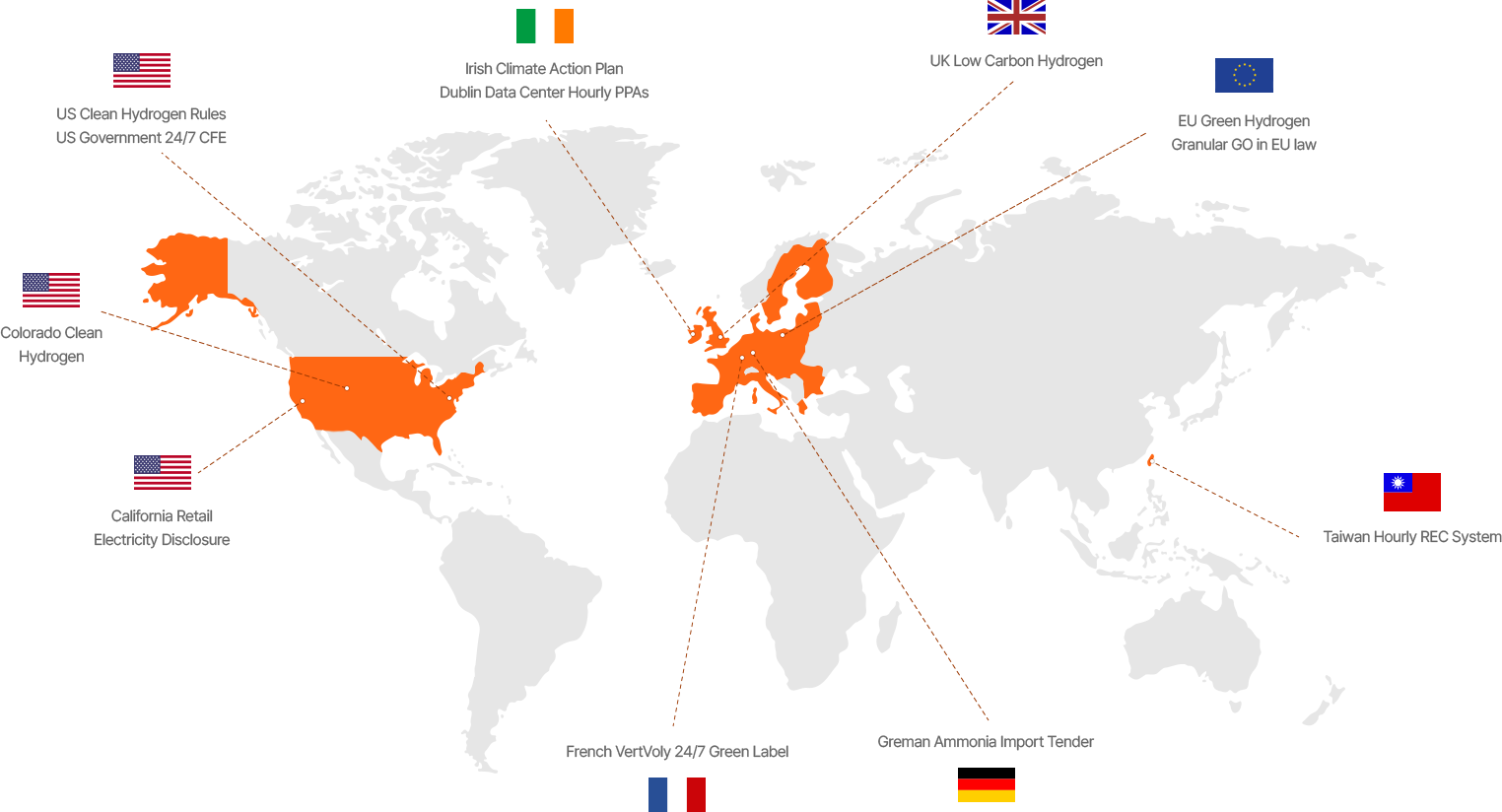
Global Policy Developments on Hourly Matching
EnergyTag Standards
Major international frameworks, including the Greenhouse Gas Protocol Scope 2 Guidance, ISO-related standards, and 24/7 CFE initiatives, are placing greater emphasis on clean electricity claims based on time-specific data. As these developments continue, hourly certificates are expected to play a growing role in corporate Scope 2 emissions reporting.
EnergyTag develops open-source technical standards to support the implementation of Granular Certificate systems across different electricity markets. These standards provide guidance on how time and location data can be applied consistently throughout the certificate lifecycle, from issuance and tracking to trading, cancellation, and claims. They help strengthen the transparency and verifiability of electricity data. The standards are designed to support different market contexts, including the expansion of existing Energy Attribute Certificate systems and the development of new systems for granular clean electricity tracking.

 Contact